

Neurodivergence, Therapy, and the Quiet Rise of Engineered Helplessness
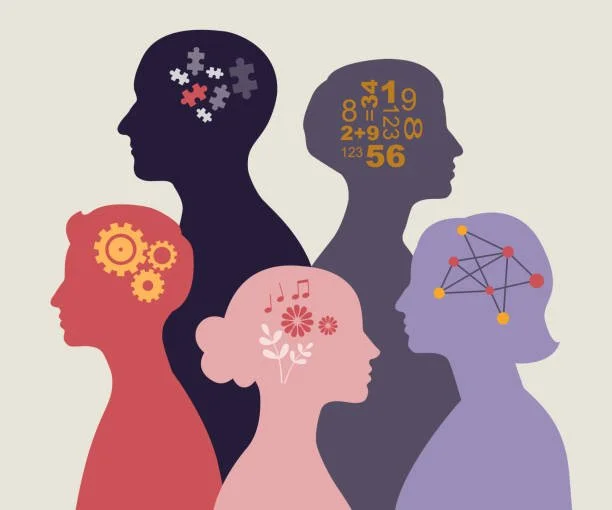
I have historically, as a therapist, stayed away from working with clients who have autism spectrum disorder. This has happened for several reasons.
First, I have been focusing on other areas of practice. We cannot be experts in everything, and pretending otherwise ultimately affects how effective we can be as providers.
Second—and more importantly—I have felt increasingly overwhelmed by the popular discourse surrounding neurodivergence. It is genuinely difficult to separate myth from truth if this is not an area you are actively specializing in. It becomes even more challenging when clients enter therapy already armed with social-media language, self-diagnoses, and firm beliefs about what their labels mean for their capacity to change.
From the very beginning, I am transparent: neurodivergence is not a specialty or focus of mine. However, I am equally clear about how I can help—usually through emotional regulation, interpersonal effectiveness, and practical skill-building. This approach is intentional. As a clinician, I look beyond diagnosis and focus on functional deficits, asking a simple but essential question:
“What practical skills can I offer this person to start improving their life now?”
As a side note—and this matters—I am not anti-DSM. Diagnosis is important and contributes significantly to my case conceptualization. This is not a rejection of diagnosis. It is a rejection of diagnosis-as-destiny.
A Larger Problem: The Devaluing of Therapy
Before addressing neurodivergence directly, I want to highlight something broader that is contributing to the devaluing of therapy itself.
There is a growing tension between:
disability movements,
our beliefs about mental disorders,
and how we approach treatment and change.
What seems to be disappearing is a serious evaluation of capacity for growth and adaptation—which is never uniform and depends on many interacting factors, including:
biological and neurological constraints
developmental history
trauma exposure
learning history
motivation and readiness for change
environmental supports and stressors
cognitive flexibility
emotional regulation capacity
insight and self-reflection
access to consistent, skilled treatment
Instead, we are drifting toward a flattened narrative where diagnosis replaces inquiry. So I find myself no longer being able to ignore the elephant in the room. The elephant being the neurodivergent movement.
Society Adjusting to You vs. You Adjusting to Society
There is also an unresolved tension between two truths that is related to the above noted larger problem:
Society should adapt to accommodate human differences.
Individuals also must adapt to society to function within it.
Increasingly, I see clients disengage from therapy—or never fully engage at all—because they believe:
“This is just how I am.”
“I’m neurodivergent.”
“I’m depressed.”
“This is how my brain works.”
These beliefs become a significant obstacle to treatment progress and prognosis. When identity hardens into explanation, curiosity collapses. Therapy stalls not because change is impossible, but because it is no longer attempted. If you believe you have no capacity for change; the result will be no change.
Enter Psycho-Babble
I recently became more aware of how deep this problem runs while reading Joe Nucci’s book Psycho-Babble: Virtual Mental Health Myths and the Truths to Set You Free. Without straying too far from the topic, I genuinely believe everyone with an internet connection should read this book.
We are labeling everything as a symptom. Everything as a disorder. These labels are then reinforced by the belief that “this is just how we are,” resulting in a socially engineered form of helplessness.
People are experiencing a decreased quality of life—not because improvement is impossible—but because their beliefs about mental illness and neurodivergence convince them it is.
That narrative is hurting people.
The History of the Term “Neurodivergent”
Nucci addresses this issue directly in Myth #14, titled “Your Awkward Friend Is Neurodivergent.”
The term neurodivergent was coined and popularized by sociologist Judy Singer. In a 2022 YouTube interview, Singer states that neurodivergent is a “fancy word for all of humanity—but don’t tell anyone.” She goes on to explain what the term is intended to do, yet never actually defines it.
I watched the interview myself and was genuinely shocked.
The purpose of the term was explicitly political—to create a social movement for neurological minorities. I understand the intention. We should celebrate differences. We should acknowledge that some people are wired differently and that the world should be more adaptive so they can succeed.
What I find troubling—and Nucci explores this in far more depth—is this:
How can an undefined term meaningfully help minorities?
The culture surrounding neurodivergence reflects this problem. Browse any social media platform and you will find ever-expanding definitions, new categories, and increasingly personalized claims of neurodivergence. At this point, the word has become functionally meaningless.
Even more concerning, Singer has at times suggested that psychotherapy cannot help neurodivergent individuals.
That statement should stop us in our tracks.
She is a sociologist—not a clinician, psychologist, psychiatrist, or neuroscientist. Commenting on treatment efficacy is well outside her scope. It would have been far more responsible not to comment at all.
Why This Matters for Clinicians
I am also concerned about clinicians who adopt neurodivergent culture uncritically.
Neurodivergent is not a clinical term. At all.
When therapists treat it as one, they risk absorbing a worldview that subtly discourages growth, adaptation, and skill development. The idea that the brain is fixed and incapable of change is outdated. Research on neuroplasticity has repeatedly disproven it. It becomes selective. Neurodivergence—Your brain is fixed. Trauma—let’s talk about how we’re going to change and rewire your brain.
My motivation for writing this is simple:
I do not want to encourage helplessness in people who come to therapy for help.
We can hold both truths:
Some people are different.
Different does not mean incapable of improvement.
Adaptation, learning, and increased quality of life are still possible.
From a clinical standpoint, I believe neurodivergent culture—as it is currently presented—often sends a poor message. Not because it acknowledges difference, but because it quietly discourages the belief that growth is possible.
And that is something I’ve wanted to say for a long time.
Bibliography
Nucci, Joe. Psycho-Babble: Virtual Mental Health Myths and the Truths to Set You Free. HarperOne, 2025, pp. 88–93.
