
Victim Mindset, Helplessness, and the Role of Therapy
As therapists, we are ethically obligated to take a balanced and clinically responsible approach to our clients’ problems. This means validating suffering without unintentionally reinforcing beliefs that undermine change.
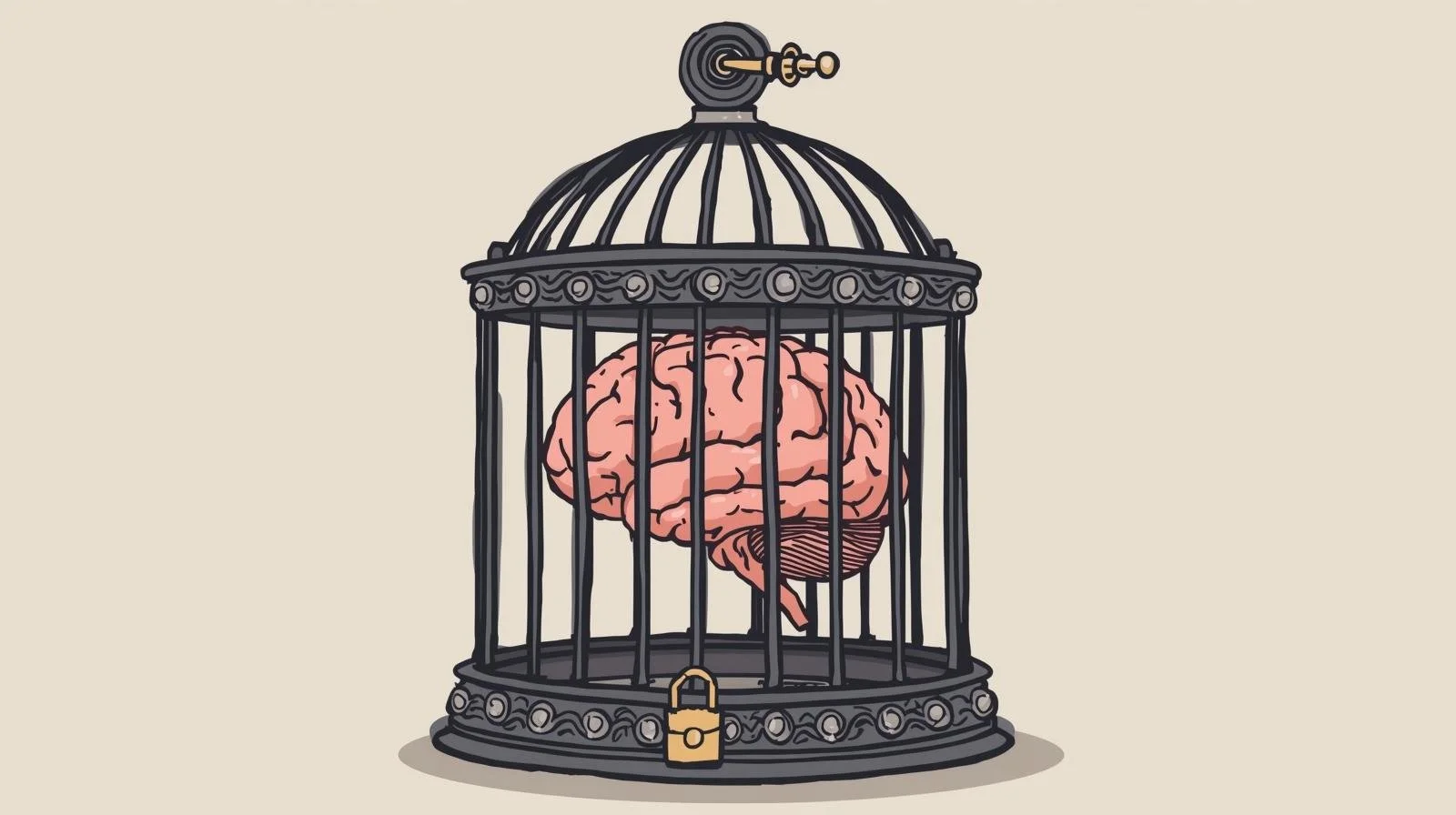
Much of what we treat in mental health—across diagnoses—can be traced back to core cognitive themes of unlovability, worthlessness, and helplessness. Today, I want to focus specifically on helplessness, because of how profoundly it interferes with treatment engagement and follow-through.
If a client fundamentally believes “nothing I do matters” or “change is outside my control,” why would they fully engage in therapeutic work? Why would they practice skills, tolerate discomfort, or persist when progress is slow? From a cognitive-behavioral standpoint, helplessness is not just a feeling—it is a belief system that shapes behavior.
Helplessness and Treatment Engagement
The degree to which a client endorses helpless cognitions is directly related to:
Reduced behavioral activation
Poor follow-through with interventions
Increased avoidance
Higher dropout rates
In short, helplessness erodes agency, and agency is foundational to effective therapy.
One of the most useful frameworks for assessing helplessness is locus of control—the degree to which a person believes outcomes are influenced by their own actions versus external forces.
Internal vs. External Locus of Control
The concept of locus of control was introduced by Julian Rotter and has since been widely studied in psychology and psychotherapy.
Internal locus of control: The belief that one’s actions, choices, and behaviors meaningfully influence outcomes.
External locus of control: The belief that outcomes are primarily determined by external forces such as fate, systems, other people, or chance.
Importantly, this is not an all-or-nothing construct. Healthy functioning involves recognizing both personal agency and real external constraints.
What the Research Shows
A consistent finding across decades of research is that a stronger internal locus of control is associated with better mental health outcomes, including:
Greater treatment engagement
Improved symptom reduction
Better coping and problem-solving
Increased resilience and self-efficacy
Conversely, a predominantly external locus of control is associated with:
Increased depression and anxiety
Passivity and avoidance
Learned helplessness
Poorer response to treatment
This does not mean that external stressors, trauma, or systemic issues are irrelevant. It means that when therapy reinforces the belief that change is primarily outside the client’s control, we risk undermining the very mechanisms that make therapy effective.
A Clinical Concern in Modern Discourse
My concern with some contemporary therapeutic discourse is that discussions of systemic oppression, decolonization, and social context are rarely carefully integrated resulting in an unintentional reinforcement of a heavy external locus of control.
When clients are repeatedly taught—implicitly or explicitly—that their distress is primarily caused by systems or maintained by forces beyond their influence, personal agency becomes secondary or suspect which leads to risk cultivating therapeutic paralysis, not empowerment.
Validation should never come at the cost of efficacy.
Therapy Must Restore Agency
Effective therapy does not deny reality—but it locates power where change is possible.
A balanced therapeutic stance says:
“Yes, there are real external constraints.”
“And within those constraints, your actions still matter.”
Our job is not to assign blame, but to strengthen agency, challenge helpless cognitions, and help clients discover where influence still exists—even when life has been unfair, painful, or unjust.
Because without agency, therapy becomes observation rather than intervention.
If therapy reinforces helplessness—no matter how compassionate the intent—it sets clients up for failure.
Our responsibility as clinicians is to reduce suffering while increasing agency, not replace one form of invalidation with another.
Bibliography
Abramson, Lyn Y., Martin E. P. Seligman, and John D. Teasdale. “Learned Helplessness in Humans: Critique and Reformulation.” Journal of Abnormal Psychology 87, no. 1 (1978): 49–74. https://doi.org/10.1037/0021-843X.87.1.49.
Bandura, Albert. Self-Efficacy: The Exercise of Control. New York: W. H. Freeman, 1997.
Benassi, Victor A., Paul D. Sweeney, and Christine L. Dufour. “Is There a Relation between Locus of Control Orientation and Depression?” Journal of Abnormal Psychology 97, no. 3 (1988): 357–367. https://doi.org/10.1037/0021-843X.97.3.357.
Cheng, Cecilia, Shu Fai Cheung, Jenny Hoi Yan Chio, and Mandy Pui Wing Chan. “Cultural Meaning of Perceived Control: A Meta-Analysis of Locus of Control, Self-Efficacy, and Attributional Style.” Journal of Cross-Cultural Psychology 44, no. 6 (2013): 929–943. https://doi.org/10.1177/0022022113481197.
Mineka, Susan, and Richard Zinbarg. “A Contemporary Learning Theory Perspective on the Etiology of Anxiety Disorders: It’s Not What You Thought It Was.” American Psychologist 61, no. 1 (2006): 10–26. https://doi.org/10.1037/0003-066X.61.1.10.
Rotter, Julian B. “Generalized Expectancies for Internal versus External Control of Reinforcement.” Psychological Monographs: General and Applied 80, no. 1 (1966): 1–28. https://doi.org/10.1037/h0092976.
Seligman, Martin E. P. Helplessness: On Depression, Development, and Death. San Francisco: W. H. Freeman, 1975.
